I'm not an engineer. I still shipped an EdTech product—idea to live URL in three weeks of nights, using Claude Code. Zero lines of code written by hand.
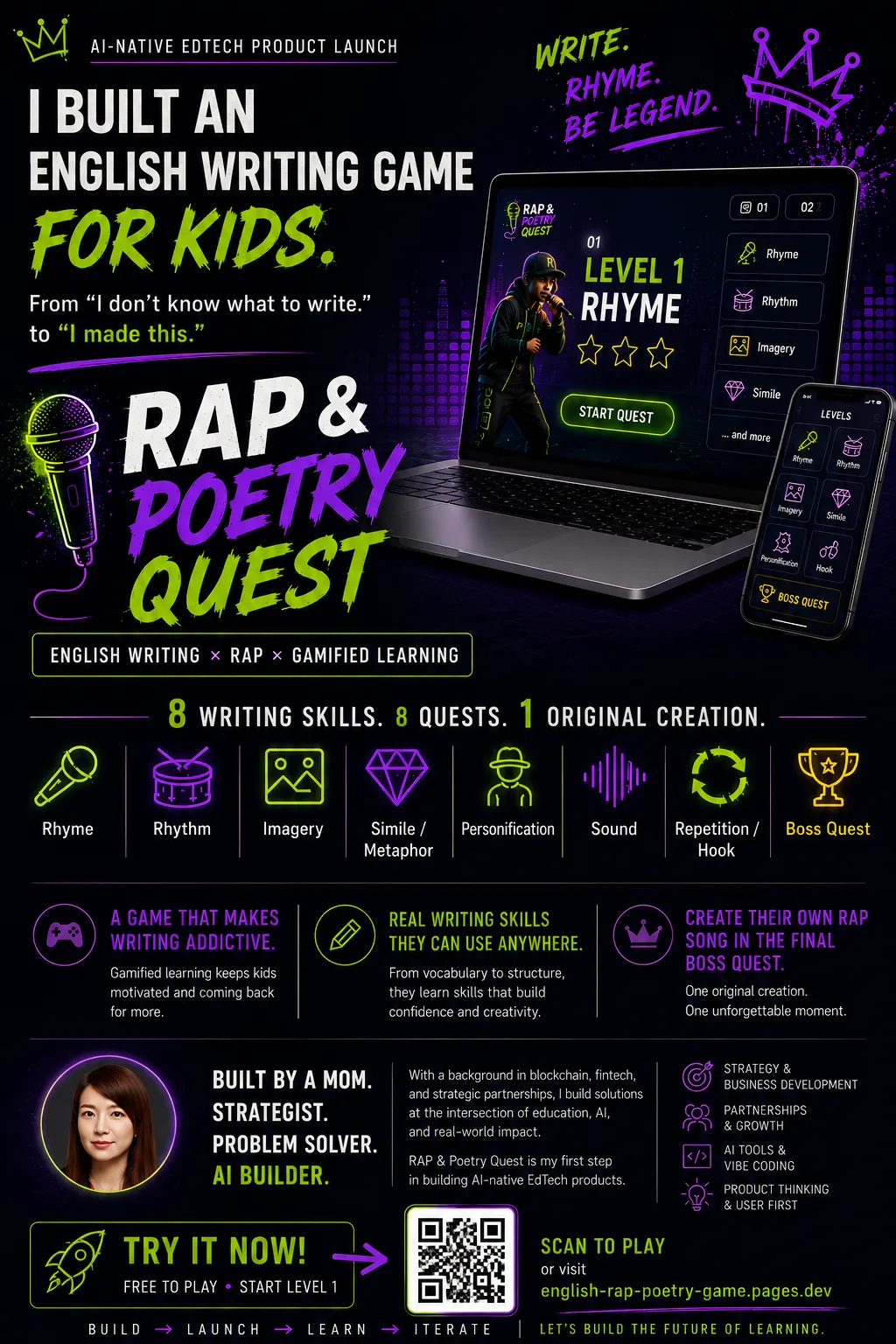
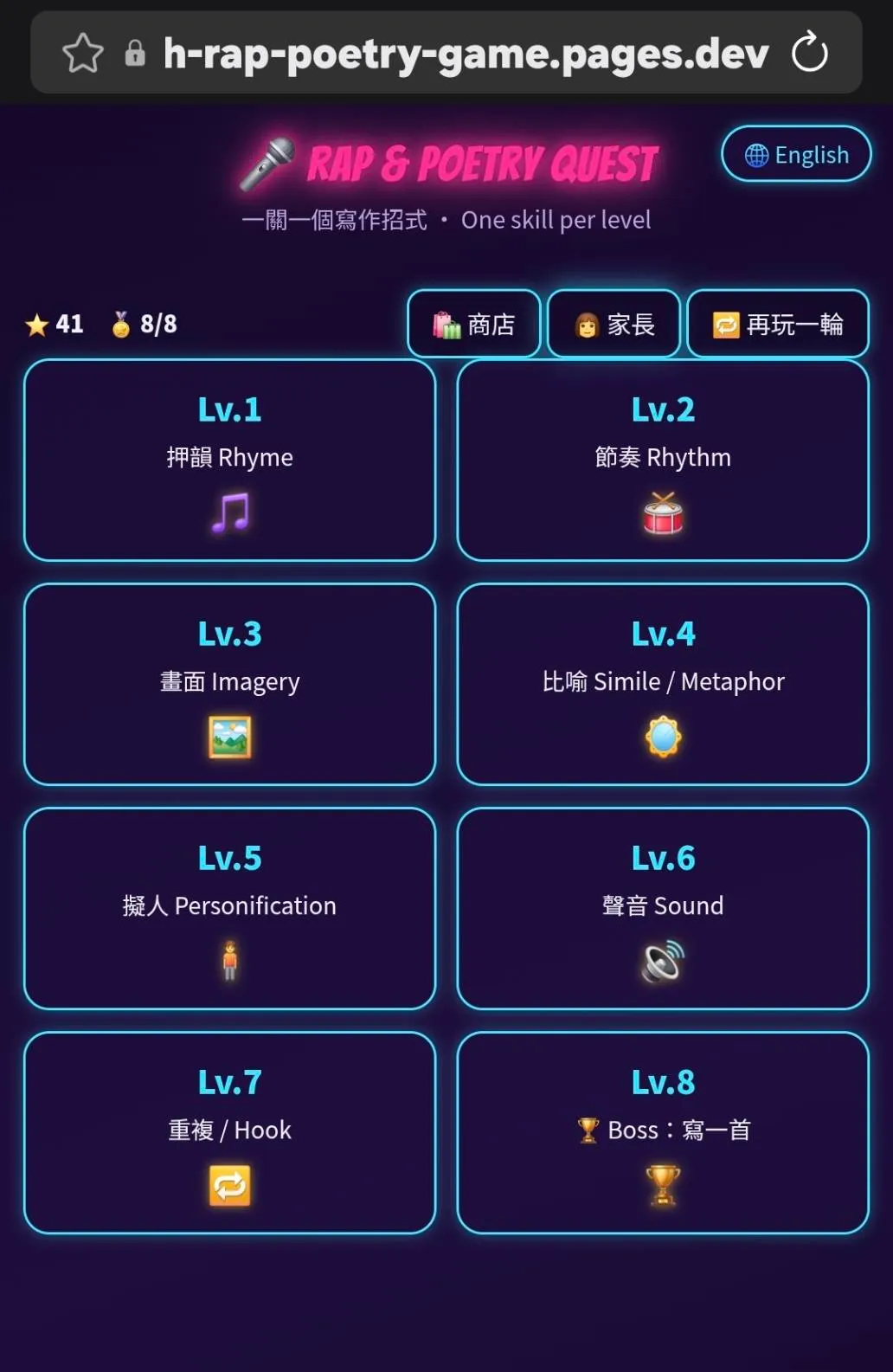
The product is RAP & Poetry Quest, a gamified creative writing experience in English for children. It breaks writing into eight progressive quests—from rhyme and rhythm to imagery, figurative language, personification, sound, and repetition—before learners attempt an original piece.
My background is in business development, strategic partnerships, marketing, and FinTech, not software engineering.
The build was as much an experiment in what an AI-enabled operator can carry from zero to one as it was a product effort.
The core design decision
Children often have the vocabulary and grammar but stall at a blank page.
The obvious build was to let AI generate the writing for them. I chose scaffolding instead: decompose creative writing into discrete skills and challenges so the learner still thinks. AI functions as a coach, not a ghostwriter.
Where the first version failed
I tested the MVP with my own children.
The feedback was direct: it wasn't fun. They played twice and did not return.
That was a motivation issue, not a build issue—and faster tooling wouldn't solve it.
Children don't come back for well-sequenced pedagogy. They come back for something they want.
The response was a reward layer.
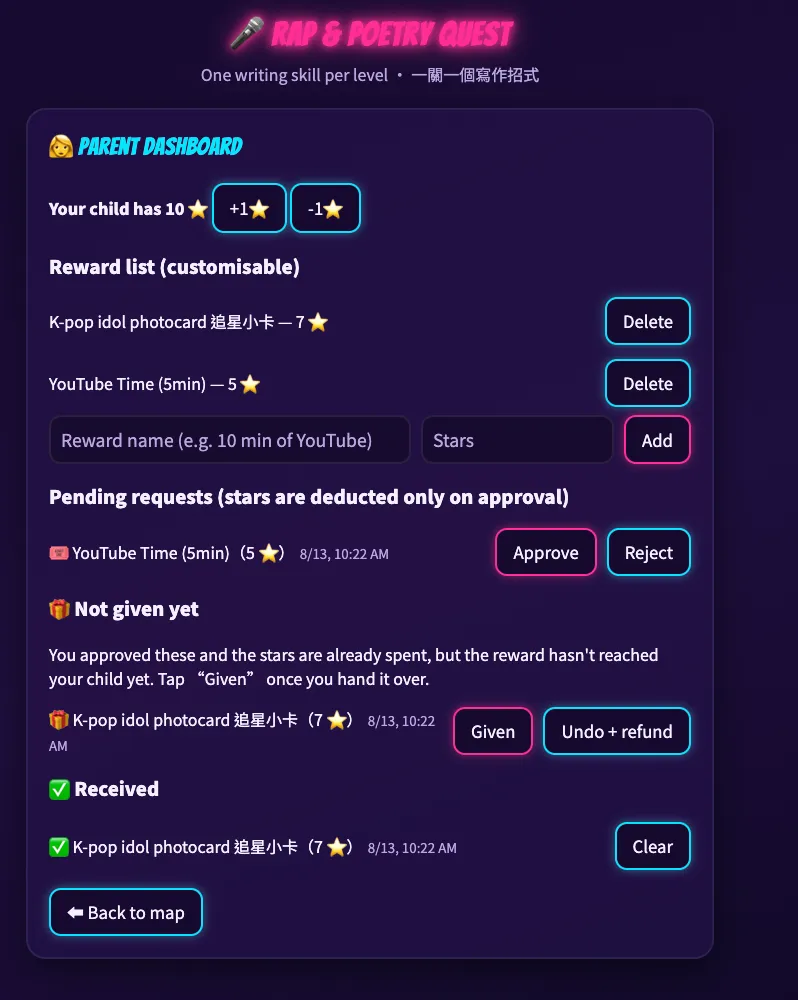
Completing a challenge earns stars, and parents define what those stars convert to in the child's real life—collectible cards, screen time, or whatever already holds value. The reward is parent-verified, which brings the parent inside the retention loop rather than leaving them to enforce practice from outside it.
What the project clarified for me
AI compressed the build to three weeks. It contributed nothing to the most important twenty minutes: watching two children lose interest and having to diagnose why. As execution cost falls, the constraint shifts upstream—to deciding what to build, whom it serves, and what brings someone back.
Product judgment, positioning, customer insight, and GTM strategy don't become less important. They become more decisive.
Next
RAP & Poetry Quest is live, and I'm treating distribution as an experiment rather than a launch:
B2C — parents seeking writing practice their child will engage with voluntarily.
B2B2C — tutors, ESL programs and learning centres that need supplemental creative-writing material.
The next stage is real users and real behavioural data.
Link in comments.
I'm also exploring opportunities in AI business development, strategic partnerships and product growth, where commercial strategy meets hands-on AI-enabled execution.
If you're bringing an AI product to market, I'd welcome the conversation.